Bandar Lampung | Fokuslensanusantara.com | 08/03/2026 – In several hearings and discussions with regional officials in Lampung, such as Tenggamus Regency, the West Coast, and several other Indonesian provinces, the Lampung ALUN team and the Indonesian ALUN DPN (National Council for Climate Change) found numerous irregularities in:
- The governance of the carbon trading system
- The governance of climate mitigation finance (specifically related to the Village Fund, specifically the Pro-Climate Village)
- The implementation of the forest rehabilitation and environmental funding system, as agreed at COP30 in Brazil in 2025, amounting to $125 billion, which will be focused on Brazil and Indonesia.
Especially in Lampung and many other Indonesian provinces, meetings with district governments revealed that local government officials, namely regents and their staff, have little knowledge or understanding of these three issues. Amidst budget tightening by the Indonesian Ministry of Finance and village budget tightening, the central government appears to be coy, or perhaps concealing, the influx of foreign funds through the Tropical Forest Rehabilitation Assistance scheme, trade through the CDM (Clean Development Mechanism), and the Joint Credit Mechanism (JCM), which can help local governments find solutions for implementing clean regional development in accordance with global environmental and forest conservation campaigns.

The lack of financial transparency, a clear and non-overlapping forest management system, clarity regarding delegation of authority, and clarity regarding financial governance related to these three issues indicate a central government’s desire to control funds that should be channeled to local governments, indigenous communities, and the private sector seeking to conserve forests and the environment. This will undoubtedly hinder the global forest and environmental conservation campaign.

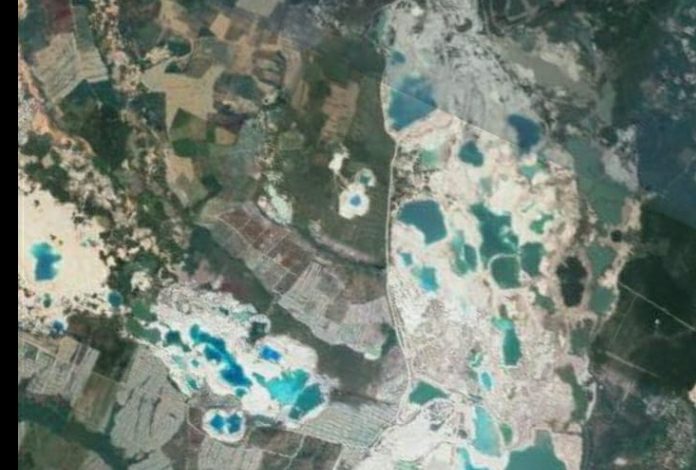
And if we examine more closely the anomalies in the Indonesian government’s policies regarding the seriousness of climate change and ecosystem development today, do we all still want to believe that humans and nature are forging a better relationship, or vice versa? The rising global temperature and the increasing destruction of forests, mangroves, and peatlands worldwide due to deforestation caused by forest exploitation for palm oil plantations, industrial forestry, rubber, and mining.
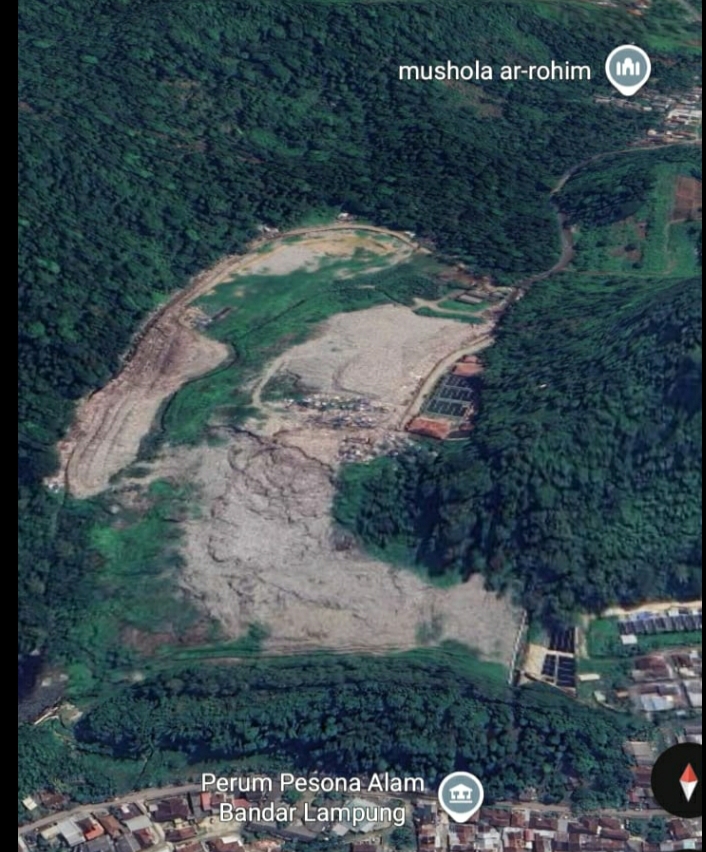
The destruction of coastal green barriers (mangroves) due to tourism, coastal shrimp and fish farms, and the destruction of seagrass beds and coral reefs due to marine pollution from industry and households have caused what were touted as environmental restoration programs through various program proposals proposed at the COP30 meeting in Brazil, attended by more than 80 countries worldwide, to appear beautiful on paper but empty and hollow in reality.
The reality on the ground is that the rate of tropical deforestation in Indonesia, reaching nearly 200,000 hectares per year, is inconsistent with the reported success of the forestry and reforestation programs claimed by the Indonesian government, through the Ministries of Forestry and the Ministry of Environment, through programs such as the FOLU Net Sink 2030 Phases 1-3 and other tropical forest rehabilitation programs.
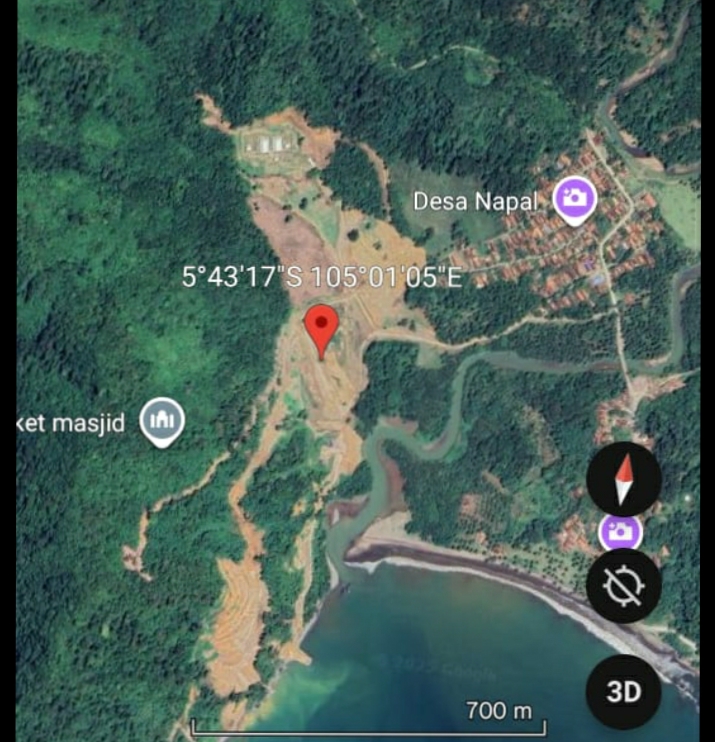
Trillions of rupiah have been disbursed, but in reality, deforestation is escalating due to land clearing for plantations and mining. Indigenous communities and traditional forest guardians, who should benefit greatly from the programs, are instead increasingly marginalized and exploited.
Reports of successful absorption of tropical forest rehabilitation funds, conducted and implemented by large NGOs and the operator (BPDLH) under the Ministries of Forestry, Environment, and Finance, indicate that the program is successful.
From the investigations of ALUN Lampung and ALUN Indonesia, several leaders of large NGOs who are partners of BPDLH and several officials and Ministers experienced a significant increase in their wealth assets in contrast to the economic level of indigenous communities and local communities who work daily to protect forests who receive almost no benefit at all from the Tropical Forest Rehabilitation Program in Indonesia.
For example, communities around the TNGL (Golden National Park) in Aceh and North Sumatra, the Mentawai and Bukit Barisan National Parks (West Sumatra), the Teso Nilo TNBB (Riau), Bukit Sebelat (Jambi), the Berbak Sembilang TNBBS (South Sumatra), and the Kerinci Sebelat TNBBS (Bengkulu), who have been fighting to protect their buffer forests, have largely missed out on the benefits of the Indonesian Tropical Forest Rehabilitation (IRRF) program.
In fact, damage to these buffer forests and conservation areas has actually increased throughout the forest areas.
Destruction of protected forests, conservation forests, and buffer areas has also occurred in the Krui and Suoh areas of Lampung, located near the TNBBS. The buffer communities have not received significant benefits from the IRRF funds. Tensions have flared up between NGOs and communities living in these buffer forest areas in the last few months of 2025. The conflict between humans and tigers has consistently marginalized communities who have lived in these buffer forest areas for generations.
On the other hand, the central government has granted gold mining permits, extending land concessions into protected forest and buffer zone areas.
Furthermore, in the buffer zone of the WKNP in East Lampung, conflicts between humans and elephants frequently occur, resulting in numerous human and elephant deaths within the conservation area.
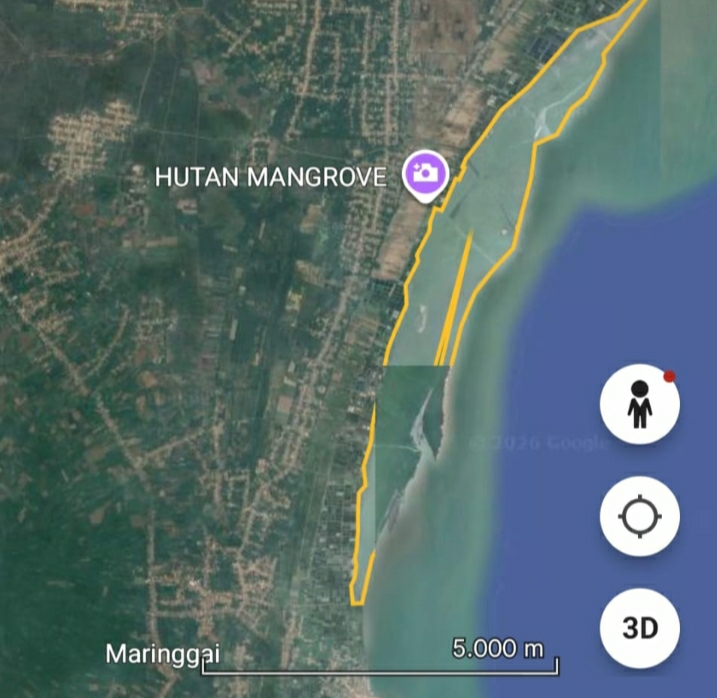
Another pattern of fraud related to environmental issues has occurred again in the coastal area of east Lampung, especially in the Maringgai harbor area, several NGOs from Canada and local NGOs with big names have carried out less commendable actions by claiming around 750 ha of mangrove land that local communities have planted and carried out conservation due to coastal abrasion since 2018.
There are strong indications that the report claims will be used by foreign NGOs partnering with local NGOs to gain benefits from the global Carbon Trading program which is estimated to be worth more than 400 billion rupiah, and according to several DPW ALUN such as in Papua and Sulawesi as well as Maluku, several foreign NGOs partnering with large Indonesian NGOs have made report claims on forest locations, peatlands and mangroves that indigenous communities have traditionally maintained and preserved to be claimed as part of assets in CARBON TRADING which only benefits certain NGO officials and world funding brokers.
Research by ALUN Lampung and ALUN Indonesia indicates that several large automotive companies, through their internal foundations, frequently claim success in environmental and nature conservation programs as part of their obligations under the global carbon program.
Field investigations have found several global and local foundations affiliated with global automotive companies engaging in double-counting, manipulating environmental work in the field, and misappropriating program funds.
These are then claimed as successes in their environmental reports, approved by officials from the Environment and Forestry Ministry, in order to obtain Green certification (carbon tax reductions, etc.).
In reality, these programs are largely ceremonial and sometimes even use significant state funds (double budgeting), particularly for social forestry programs and environmentally conscious village movements.
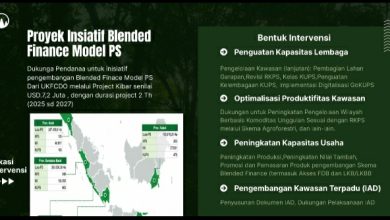
What is even funnier than all the above matters related to the chaotic management of tropical forest rehabilitation funds in Indonesia, amidst the imbalance in the delegation of authority and the unclear priorities of the environmental and forest rescue budget related to sea level rise due to climate change, the Indonesian government suddenly claims that the Indonesian Tropical Forest Rehabilitation program has been successfully implemented after starting such a serious matter in 2022 and launching the Blending System program through FOLU phase IV which aims to increase the economic value of farmers/plantations, cooperatives and tourism.
Even more astonishing, amidst unclear environmental and forest governance, the central government has launched a plan to build a giant sea wall stretching 500 km from Banten province to the tip of East Java, costing an estimated budget of almost 1,500 trillion rupiah.
(Source: Coordinating Ministry for Infrastructure and Regional Development.
https://share.google/bqkO74DplWPfIU2j1). While coastal communities in North Java are struggling to find funds to plant mangroves, a plan to build a giant sea wall costing almost 1,700 trillion rupiah, stretching 500 km from Banten to East Java, has suddenly emerged. Isn’t this incredibly confusing? With the construction of such a massive and mega-structure, won’t many hills and forests be destroyed, and islands sink because their rocks and sand are used for this mega-project?
If this pattern continues unchecked, the noble intentions of world leaders for a more sustainable environment, a more friendly climate, and better forests, outlined in the 1997 Kyoto Protocol (UNFCCC), the 2015 Paris Agreement, and the 2025 COP30 in Brazil, will become nothing more than empty promises, driven by the machinations of global environmental criminals, including donor officials, funding brokers, oil companies, the automotive industry, global and local NGOs, and Indonesian government officials, who are greedily eroding and embezzling funds for tropical forest rehabilitation, environmental protection, and improving the welfare of traditional communities and forest rangers!
The question is: Will we continue to tolerate this, or will we stop these dirty practices?
In this case, the Lampung ALUN DPW and the Indonesian ALUN DPN will file a lawsuit in the international court regarding the misuse of Climate Mitigation Finance governance by the Indonesian government and will also sue related parties, especially companies involved in deforestation in Indonesian territory, in the WTO (World Trade Organization) forum.
Redaction/Fokuslensa usantara.com